2026-06-25
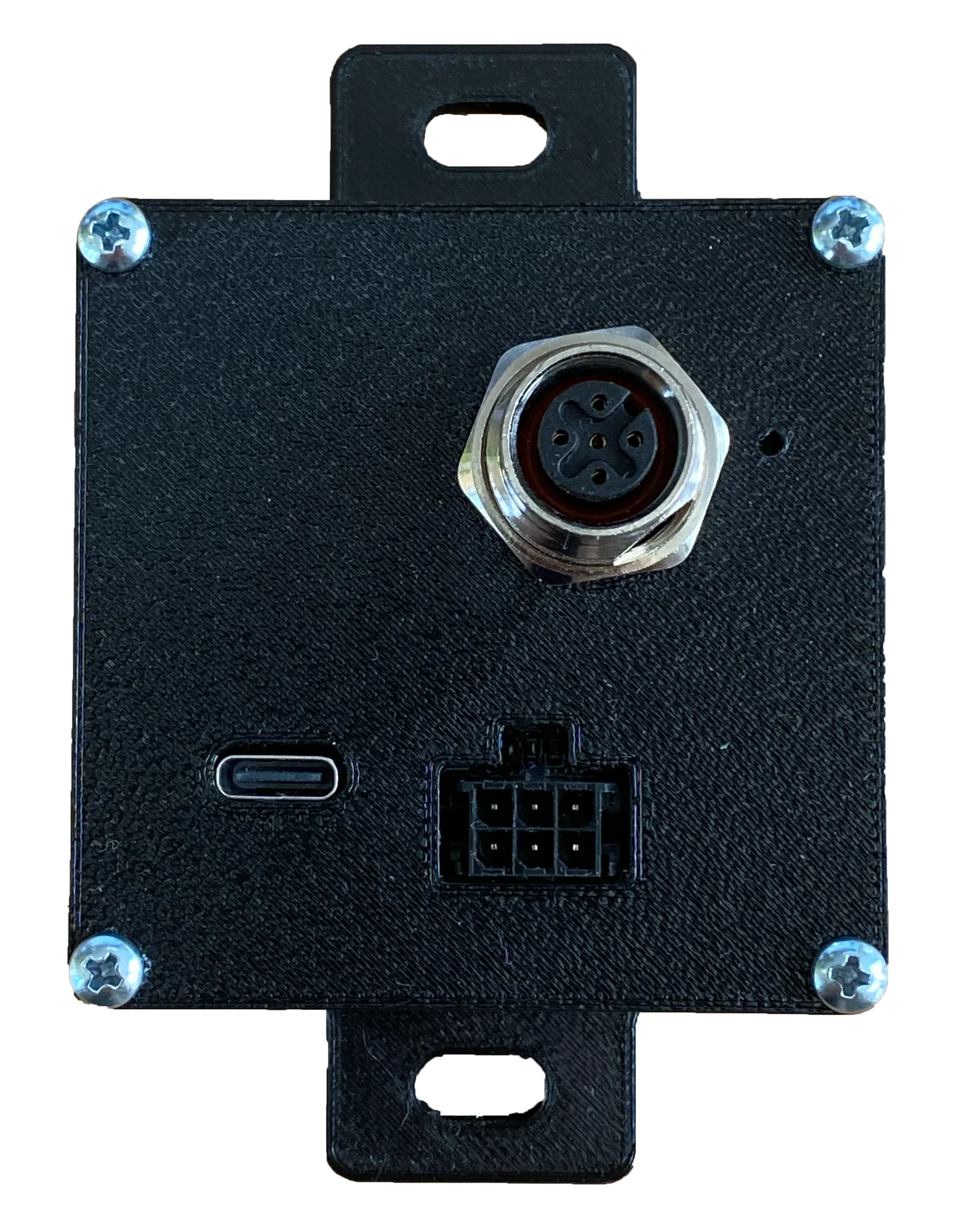
A family of STM32-based NMEA 2000 converters
NMEA 2000 is the CAN-based network that ties a boat's instruments together: displays, GPS, engines and sensors all share one backbone. Electric propulsion and lithium battery systems are newer arrivals, and they usually speak their own CAN dialect rather than NMEA 2000. These gateways translate between the two.
The idea is deliberately narrow: one small, galvanically isolated box per source, each flashed for a specific job, so the data simply appears on whatever multi-function display is already installed.
The variants
- EMUS BMS → NMEA 2000 — publishes battery state of charge, voltage, current and temperature as a standard battery instance.
- Electric motor → NMEA 2000 — publishes motor RPM, temperature and power from the motor controller (SME / HypE protocols by default).
Both share the same hardware; the firmware build decides what it translates. Other BMS or motor protocols are possible on request — the translation table is the part that changes.
How it is built
Each gateway runs STM32 firmware in embedded C. On one side it reads the source CAN bus (the BMS or motor controller); on the other it frames NMEA 2000 PGNs onto the backbone, with galvanic isolation between the two so a fault on one bus stays there. It connects to the source over a 6-pin micro-fit link and to the network over a standard 5-pin M12 NMEA 2000 connector.
Where it fits
Electric conversions and hybrid installs on boats, where the owner wants engine and battery data on the same screen as everything else, without a separate app or tablet. Small, quiet, and fit-and-forget.
Have a look at the NMEA 2000 gateways.