2026-10-30
POND-VA6: measuring microbes without stealing their power
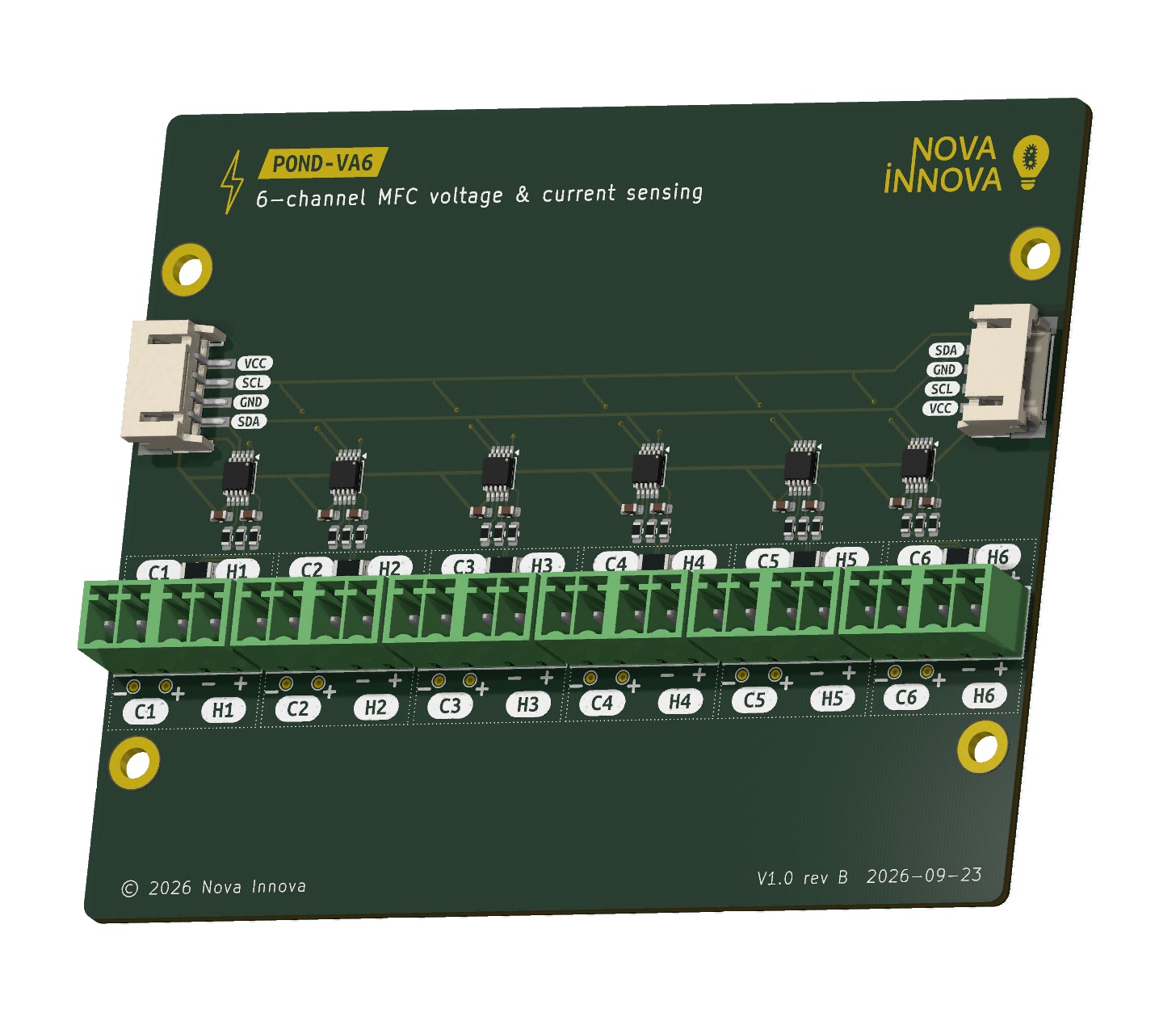
In POND, bacteria in the water make electricity. Each microbial fuel cell gives a few hundred microwatts at most, which a harvester collects to power the sensors and the lights. To improve the cells you need to see what each one does over time. POND-VA6 is the board I designed for Nova Innova to measure that, six cells at a time.
What it does
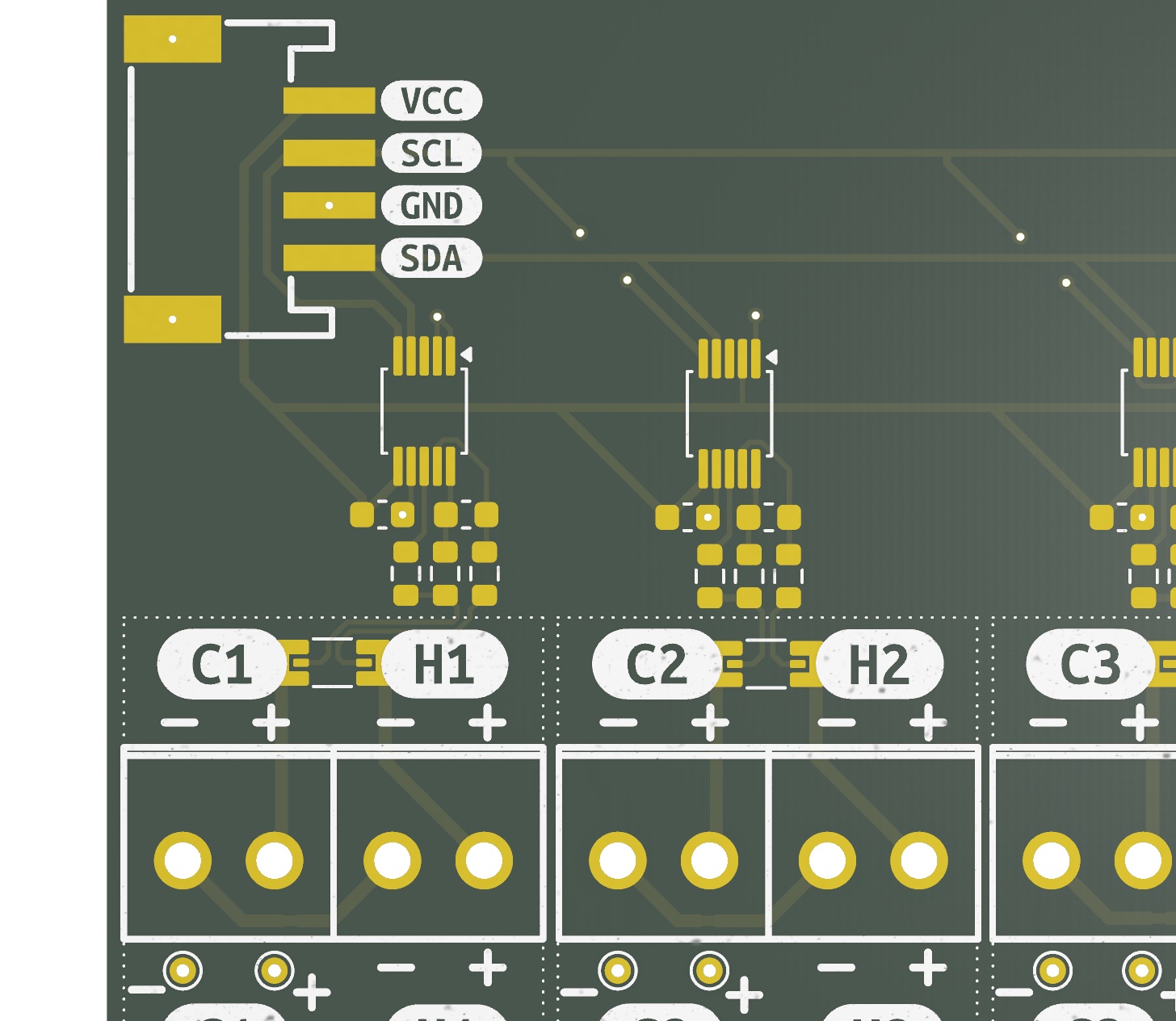
The board sits between the cells and the harvester. Each channel has a screw terminal for the cell (C) and one for the harvester (H), with a small shunt resistor in between. A power monitor chip per channel reads the cell voltage, the harvested current and the board temperature, and reports over I²C. Power and I²C loop through two identical connectors, so the board slots into the chain next to the existing water-quality sensor board.
Measuring almost nothing, for almost nothing
The board must not take power from the cells it measures. The first prototype used ordinary ADCs, and that went wrong: the cells are always connected, but the electronics are switched off most of the time. A normal ADC input clamps to its own supply, so the cells quietly fed the board's dead supply rail, around the clock.
Rev B fixes that with a different chip: a current-sense monitor whose inputs are independent of its own supply, powered or not. It measures voltage and current in one package with nanoamps of input bias, and the board ended up with fewer parts than the prototype.
A few other details:
- High-side shunt. All cells share a ground and sit in the same water. With the shunt in each cell's positive lead, current leaking through the water never crosses it.
- Kelvin sensing. Wide pads carry the current, and narrow sense tabs pick the voltage straight off the resistor, so copper resistance stays out of the reading.
- Short bursts. The board wakes a few seconds per hour, measures for about 84 ms and shuts down. All in, it takes under 0.2 % of what the cells produce.
Testing on the bench first
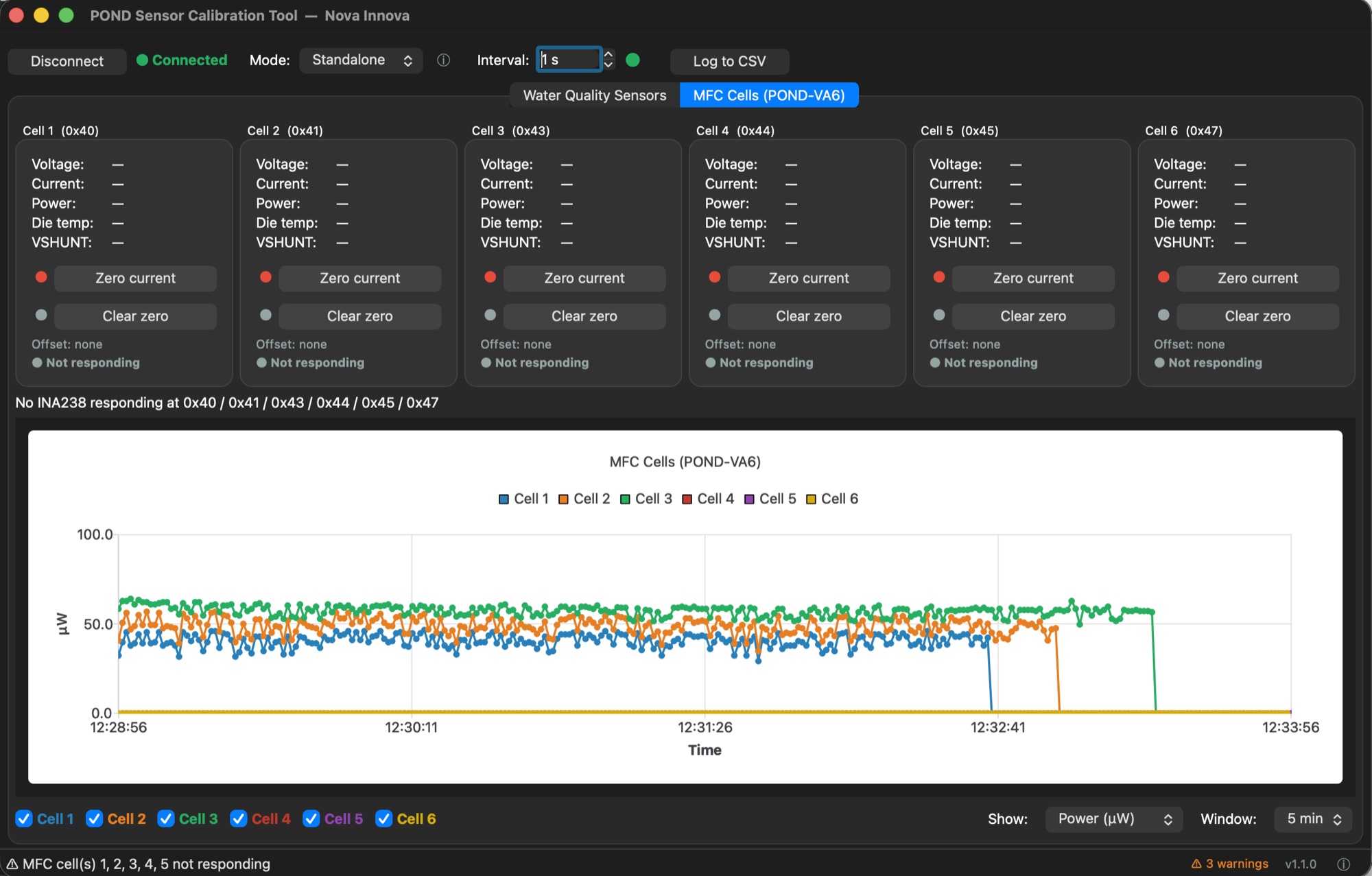
Before any of this goes into InfluxDB and Grafana, the cells are tracked locally. I extended the POND sensor calibration tool with a tab for POND-VA6. It connects to the board over USB and shows voltage, current and power per cell live, captures the zero-current offset per channel, and logs to CSV. It is a simple way to debug the board and get to know the cells before the data goes to the cloud.
Why I like this one
Most boards are about doing more. This one is about doing as little as possible, and choosing one part for the right reason removed a whole category of problems.
More on POND: firmware work on the installation.